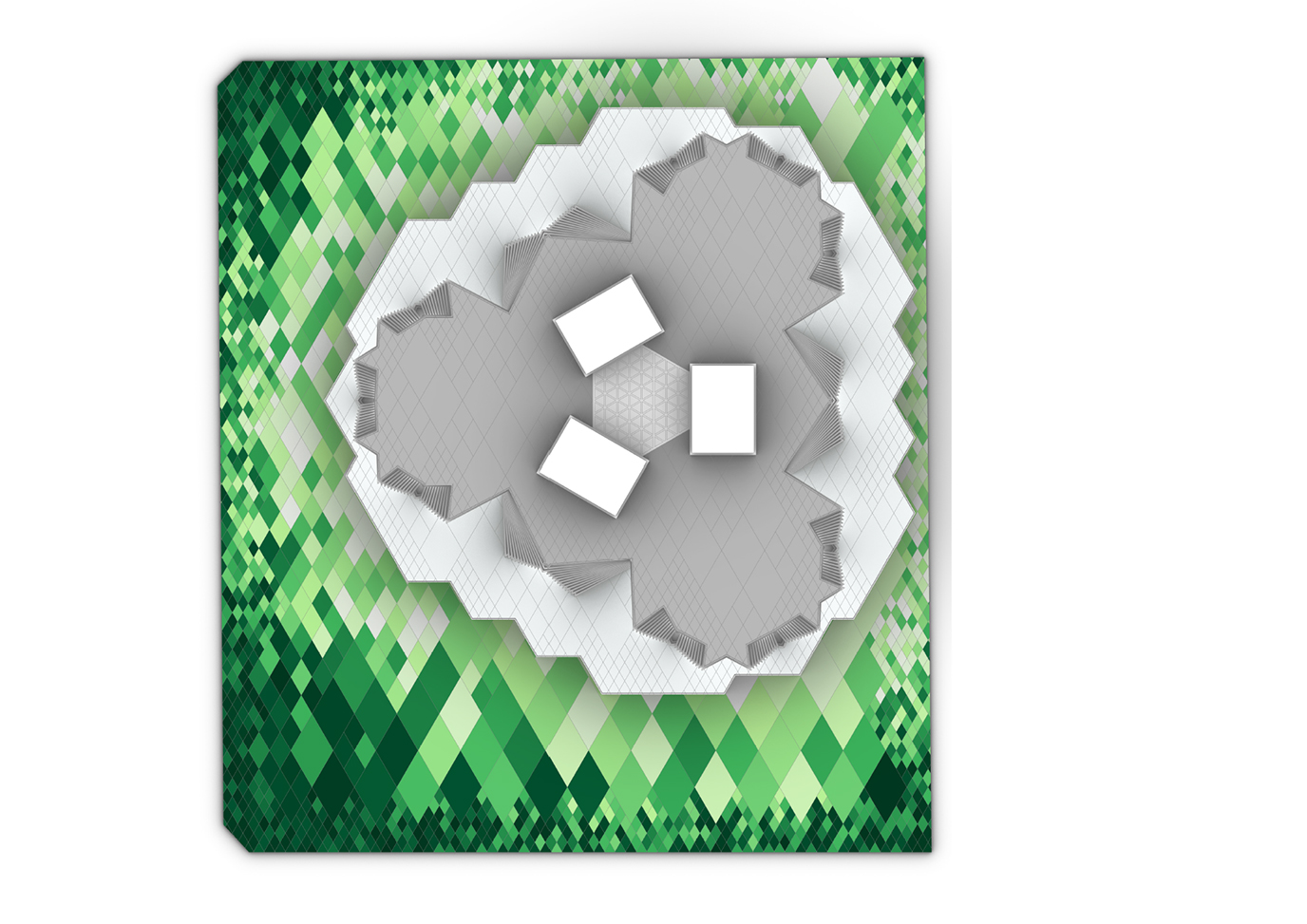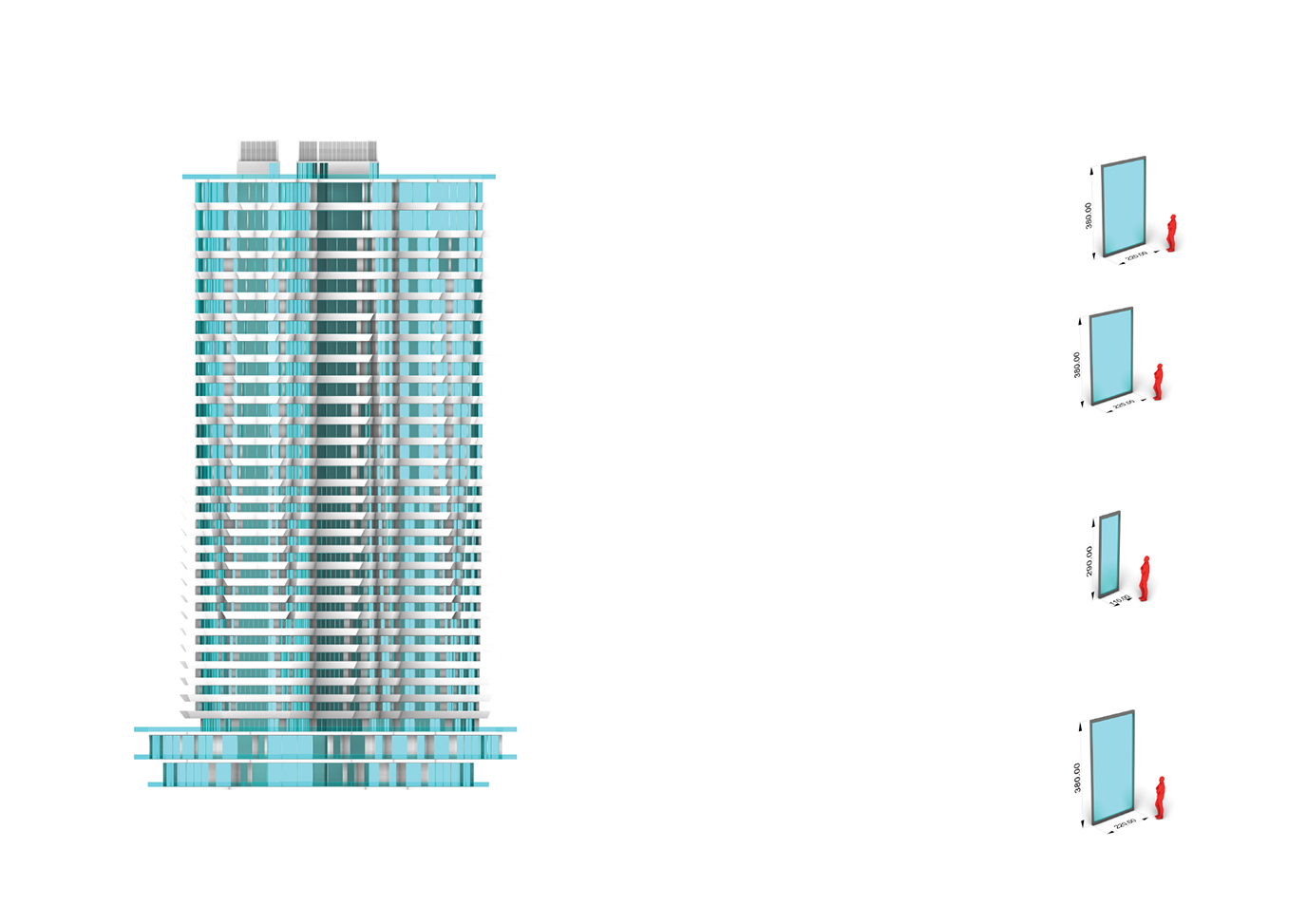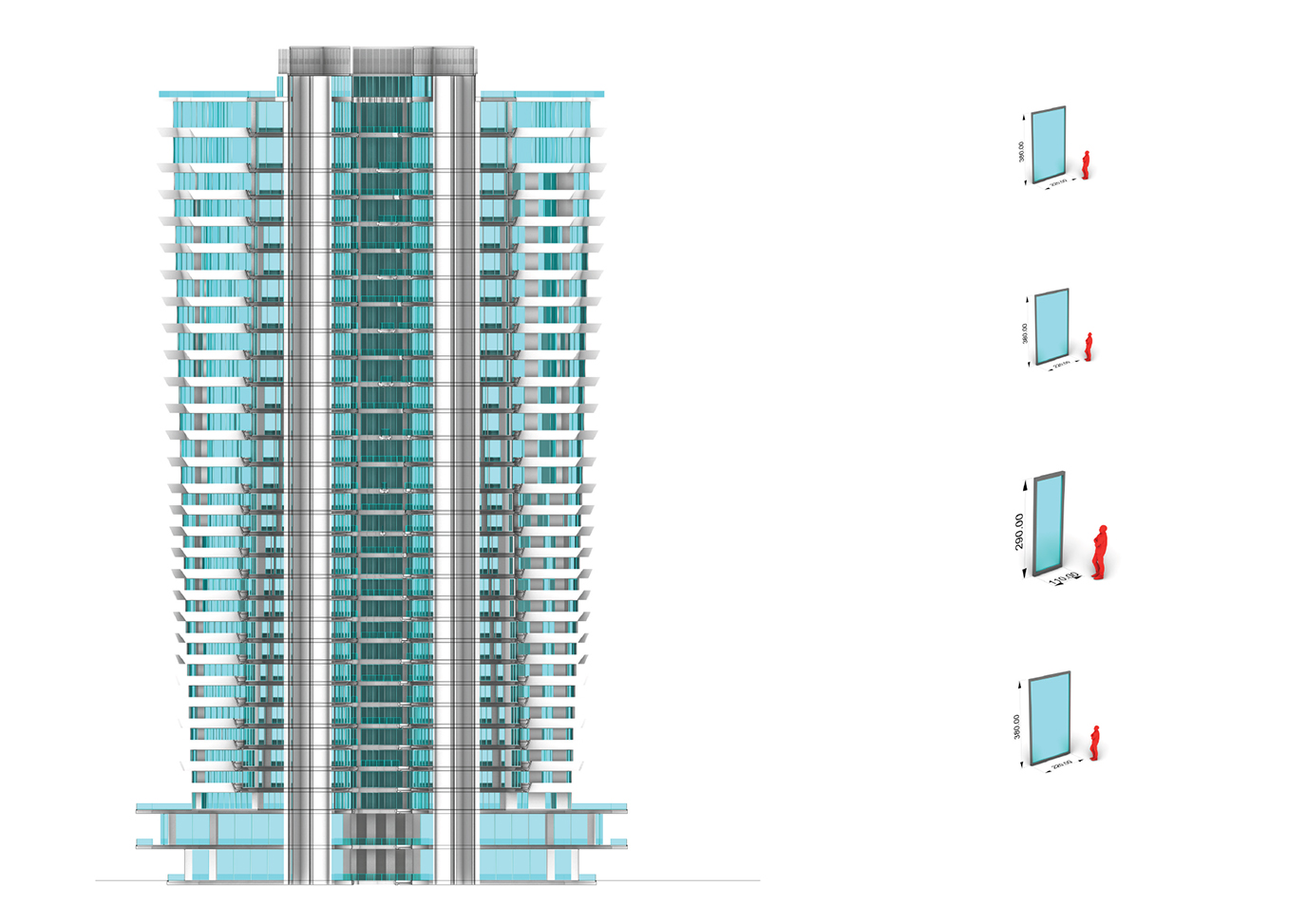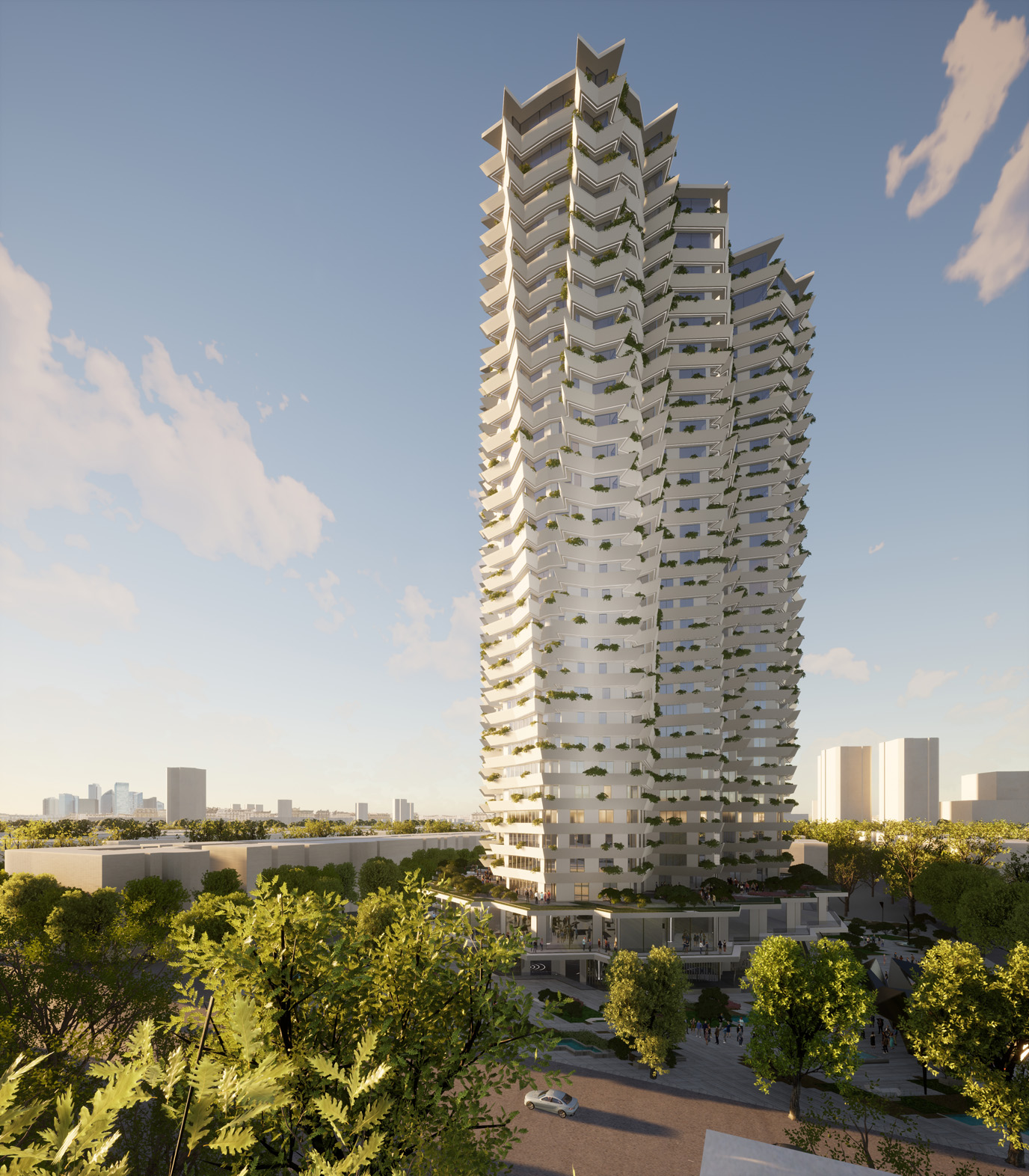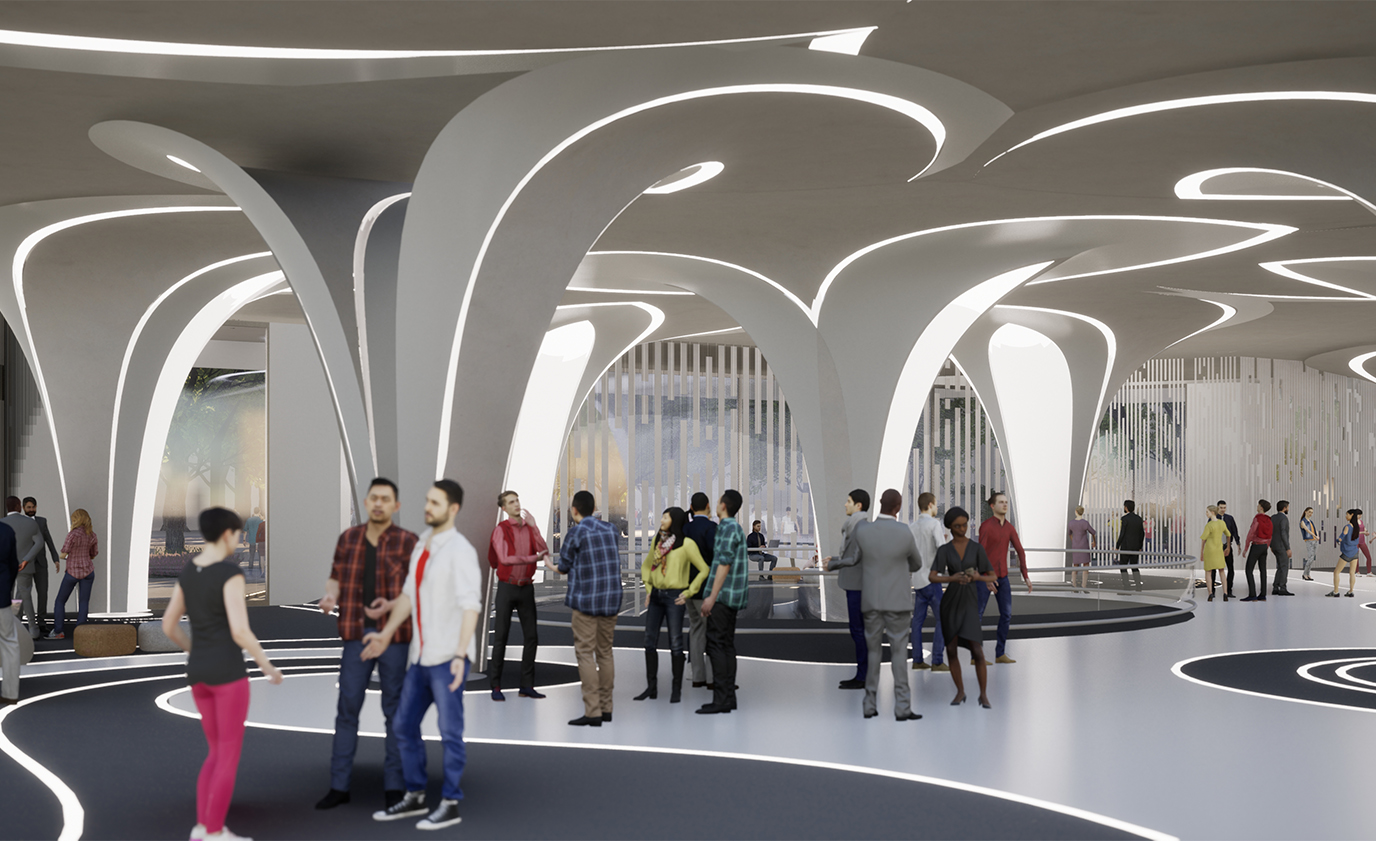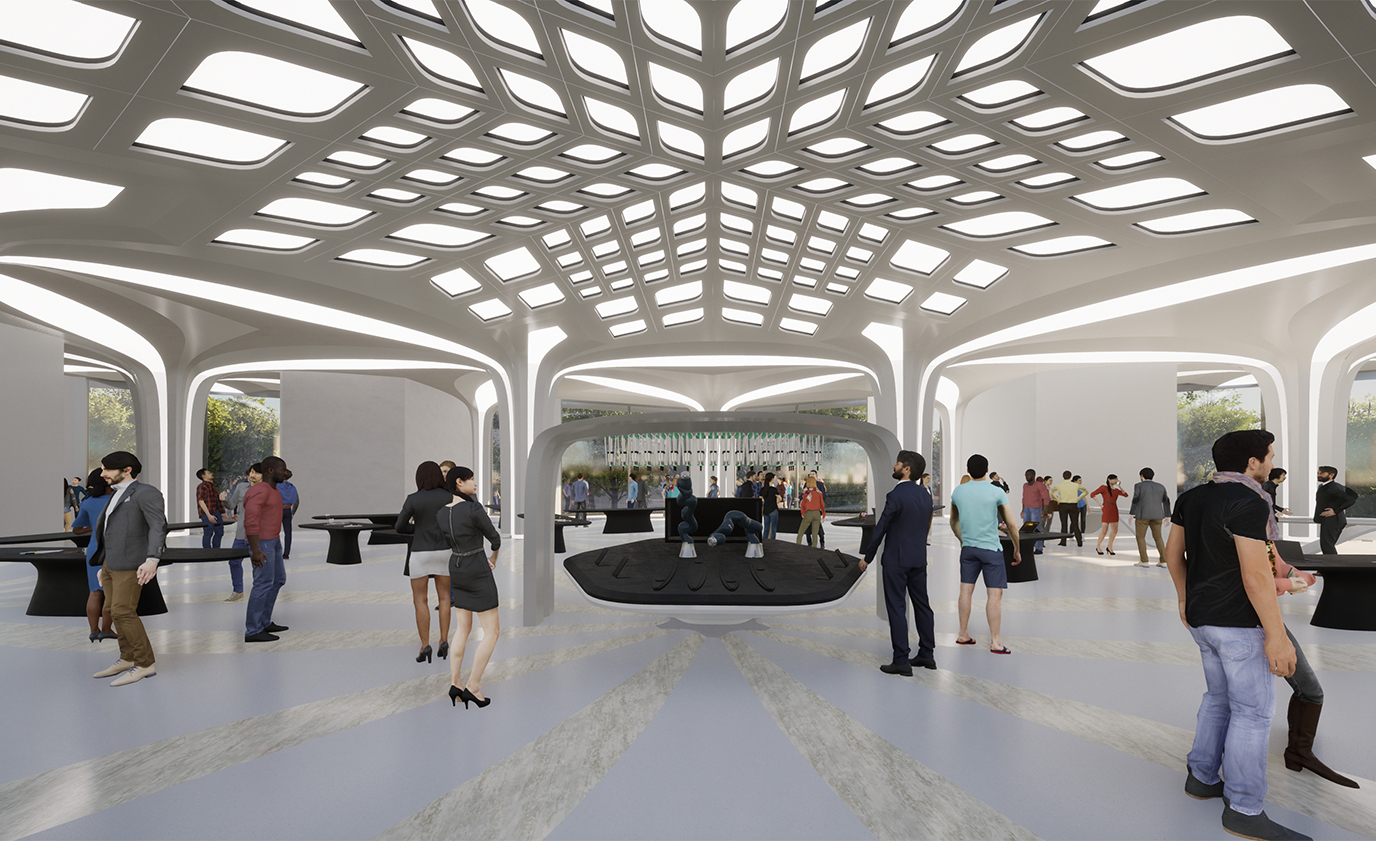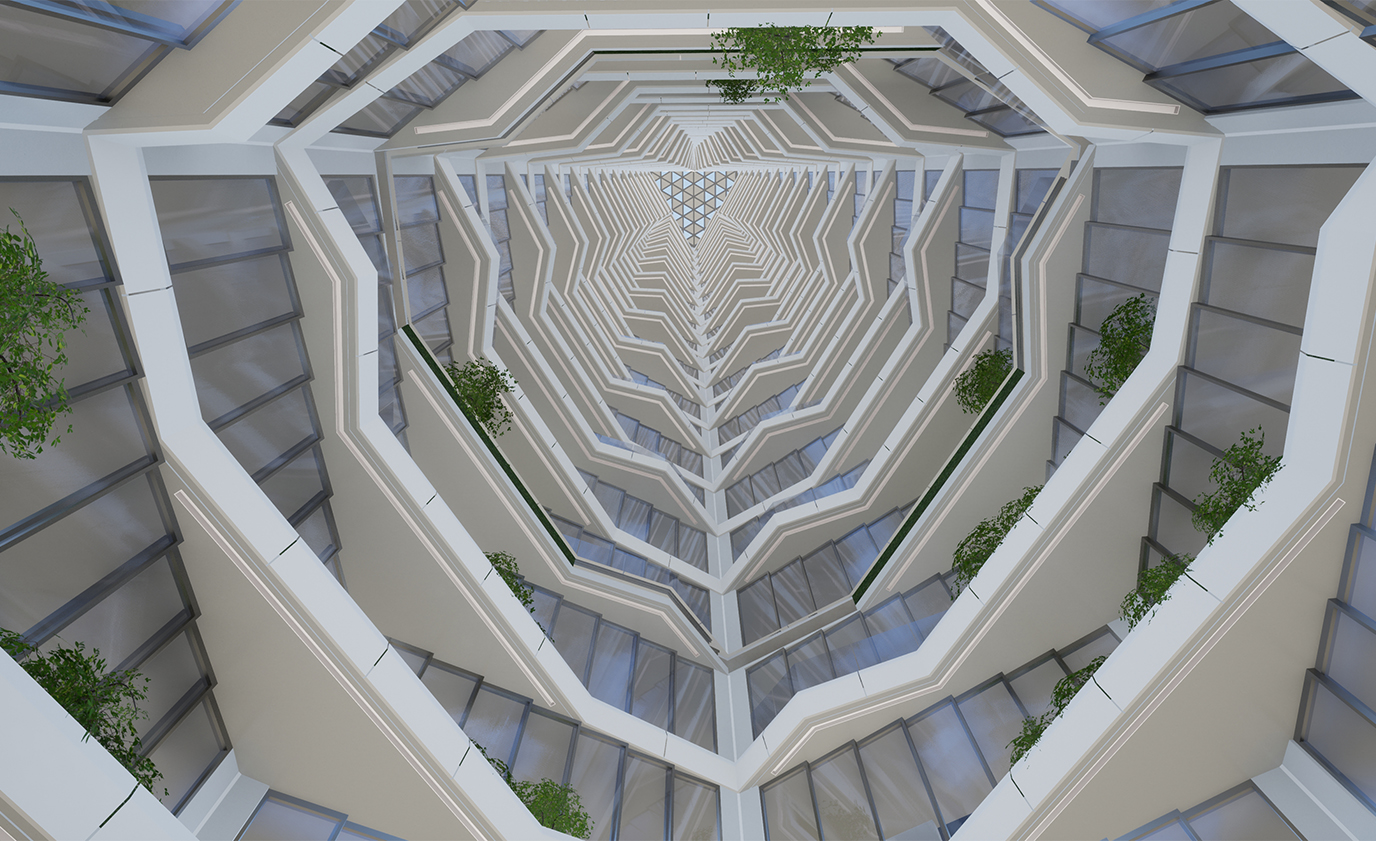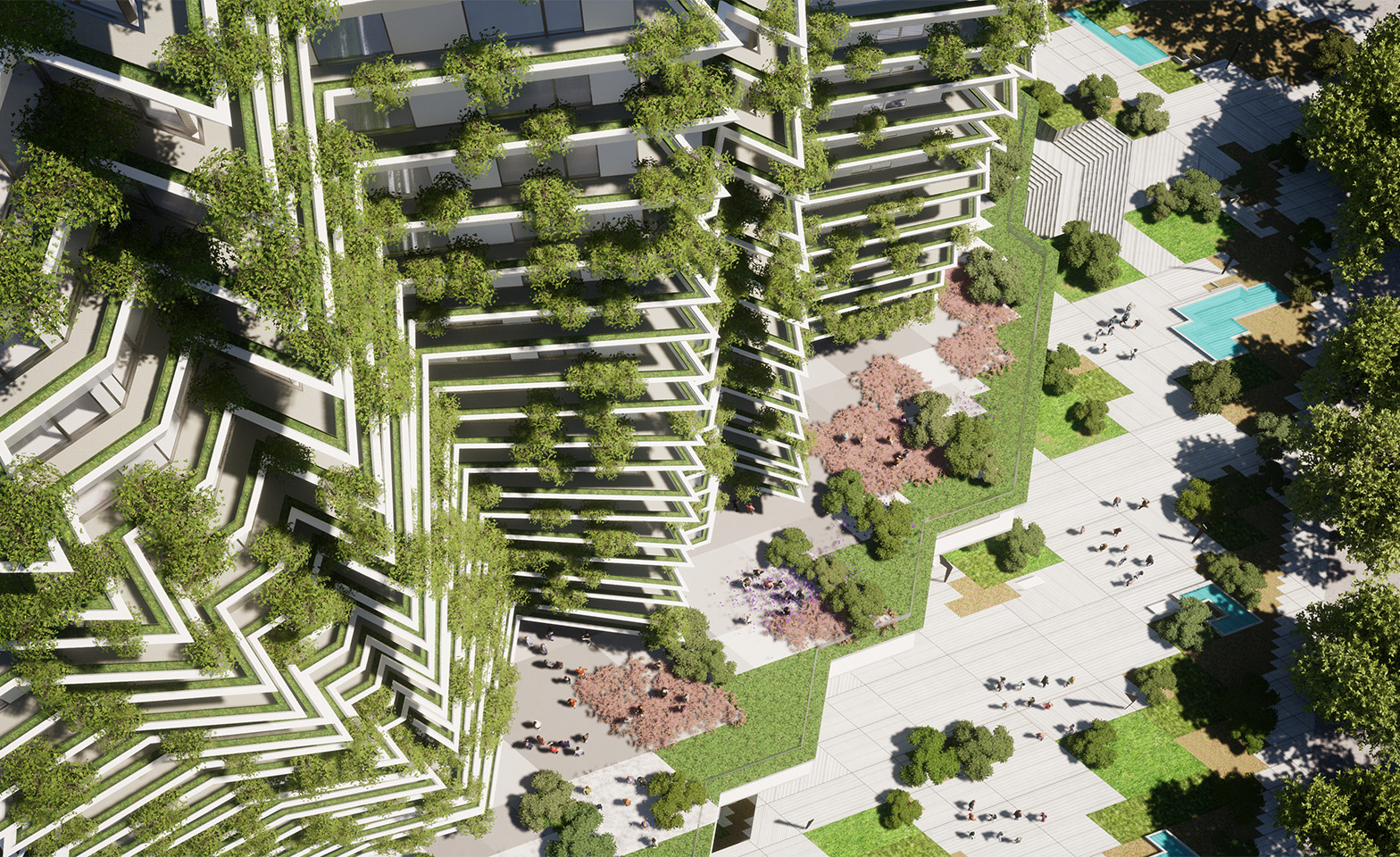
Battle of Patterns — In Search of Holistic Design Systems
Patterns, by definition, are sequences or formations that repeat. They emerge as visible regularities throughout nature and manifest through geometric structures such as symmetry, fractals, spirals, bubbles, and tessellations. From the formation of galaxies to the configuration of atomic orbitals, the universe operates through underlying rules that express themselves as patterns. For millennia, humans have sought to understand this order—using mathematics to reveal, interpret, and abstract the behaviors shaping the natural world.
The Battle of Patterns [BoP] program aims to redefine our conventional understanding
of patterns by exploring new possibilities within complex geometries. The initiative expands
the rational and creative capacities of pattern-based thinking,
investigating how these systems intersect across multiple design
disciplines—architecture and engineering, urban and landscape design,
interior and product design, as well as fashion and graphic design.
BoP positions pattern as a unifying language capable of bridging diverse fields into a holistic design methodology.
Principal: Arian Hakimi [Arian Hakimi Architects]
Design Leads: Hoda Eskandarnia [Nia Studio]; Sara Amiri [Sors Studio]; Kaveh Dadgar [Gensler]
Associate: Nariman Nejati [Arian Hakimi Architects]
Design Methodology
The form-finding process follows a rigorous morphological approach grounded in scientific exploration. It unfolds through four interconnected phases, each contributing to the development of a holistic and adaptable design system.
Phase 1 — Component Study
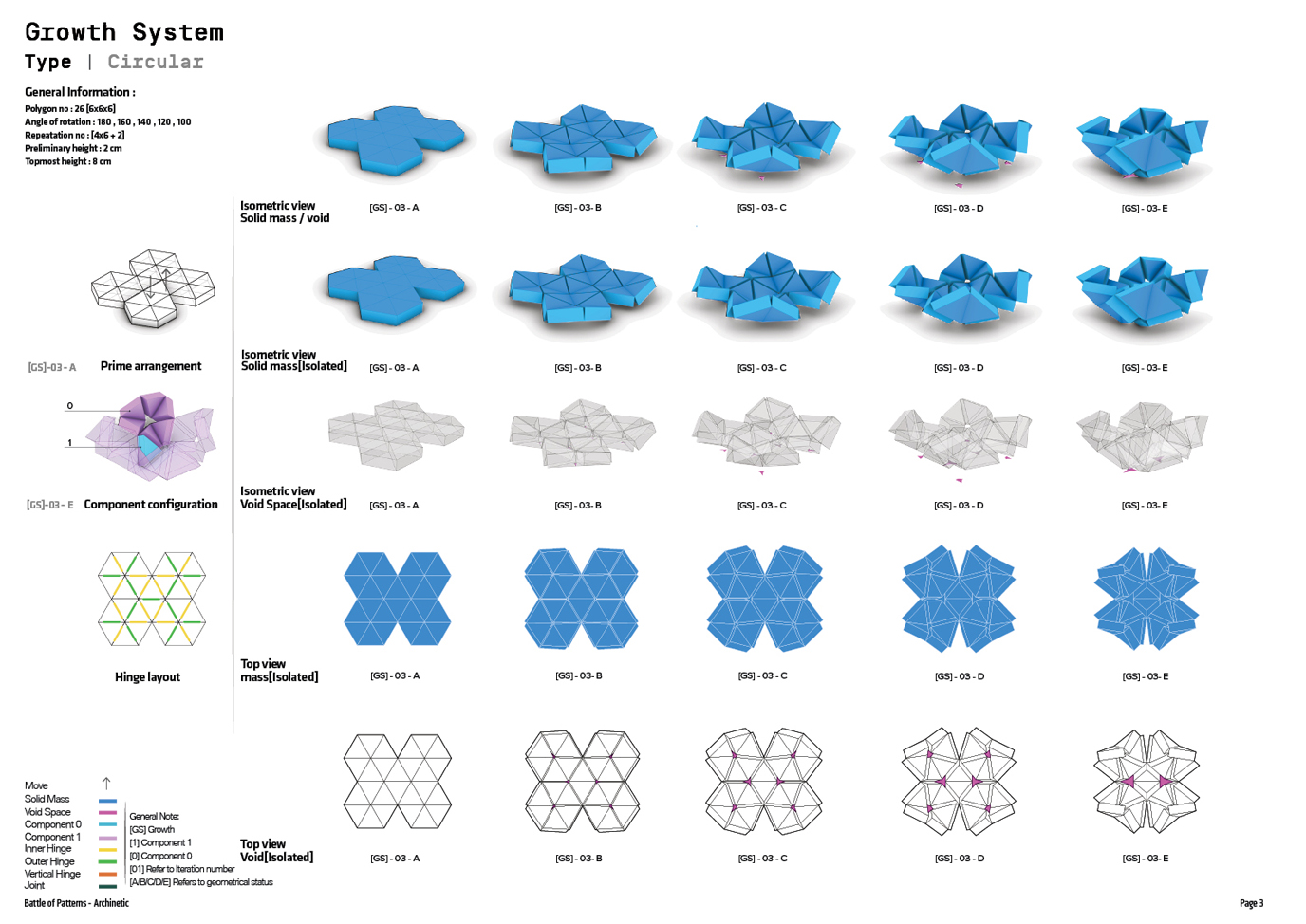
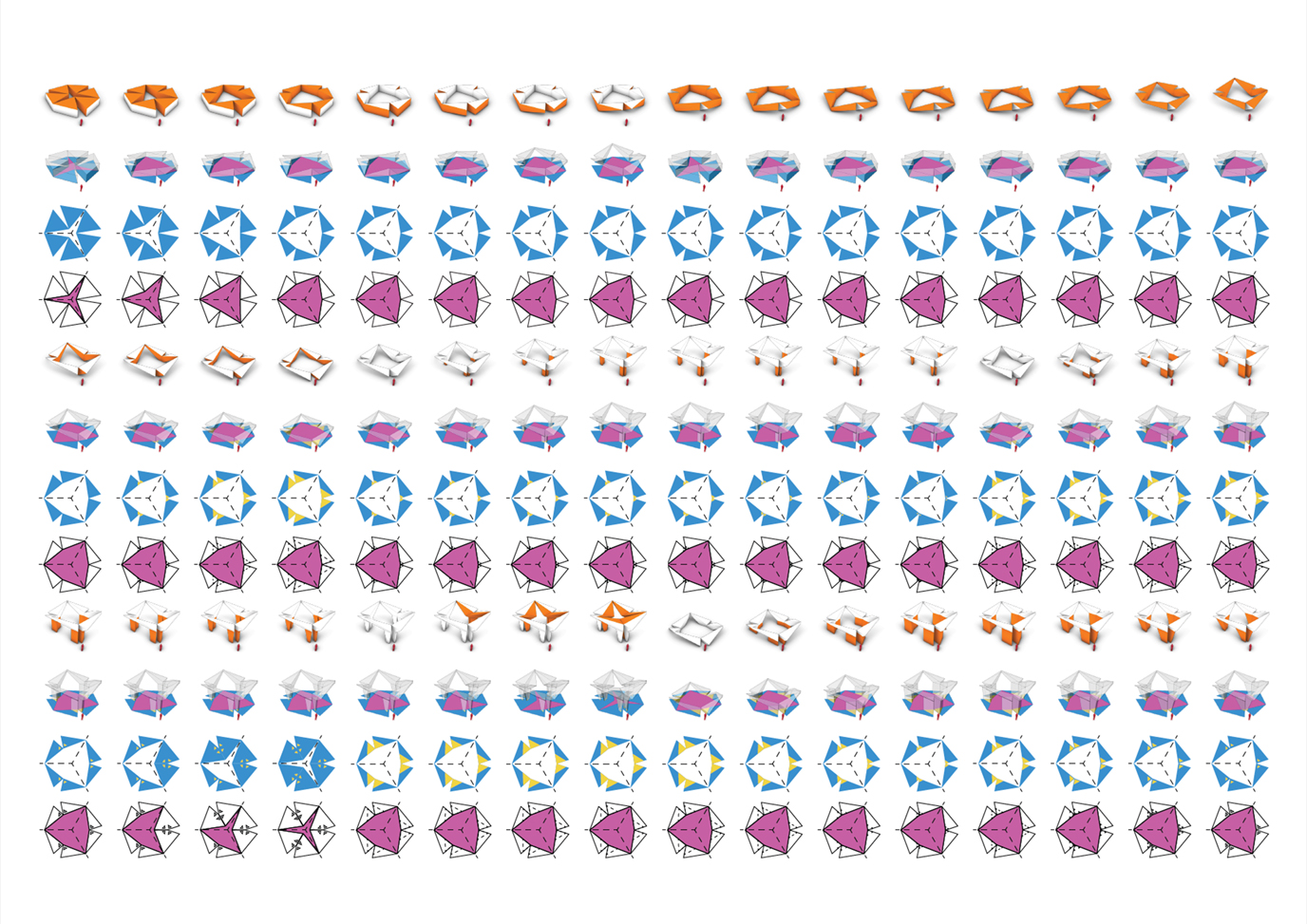
Participants begin by examining a set of pre-rationalized components. Through systematic experimentation—altering geometric parameters and reintroducing the human body as a reference for scale and proportion—they build an understanding of the component’s potential. This phase results in a matrix-based catalogue documenting all discovered configurations.
Phase 2 — Growth Study
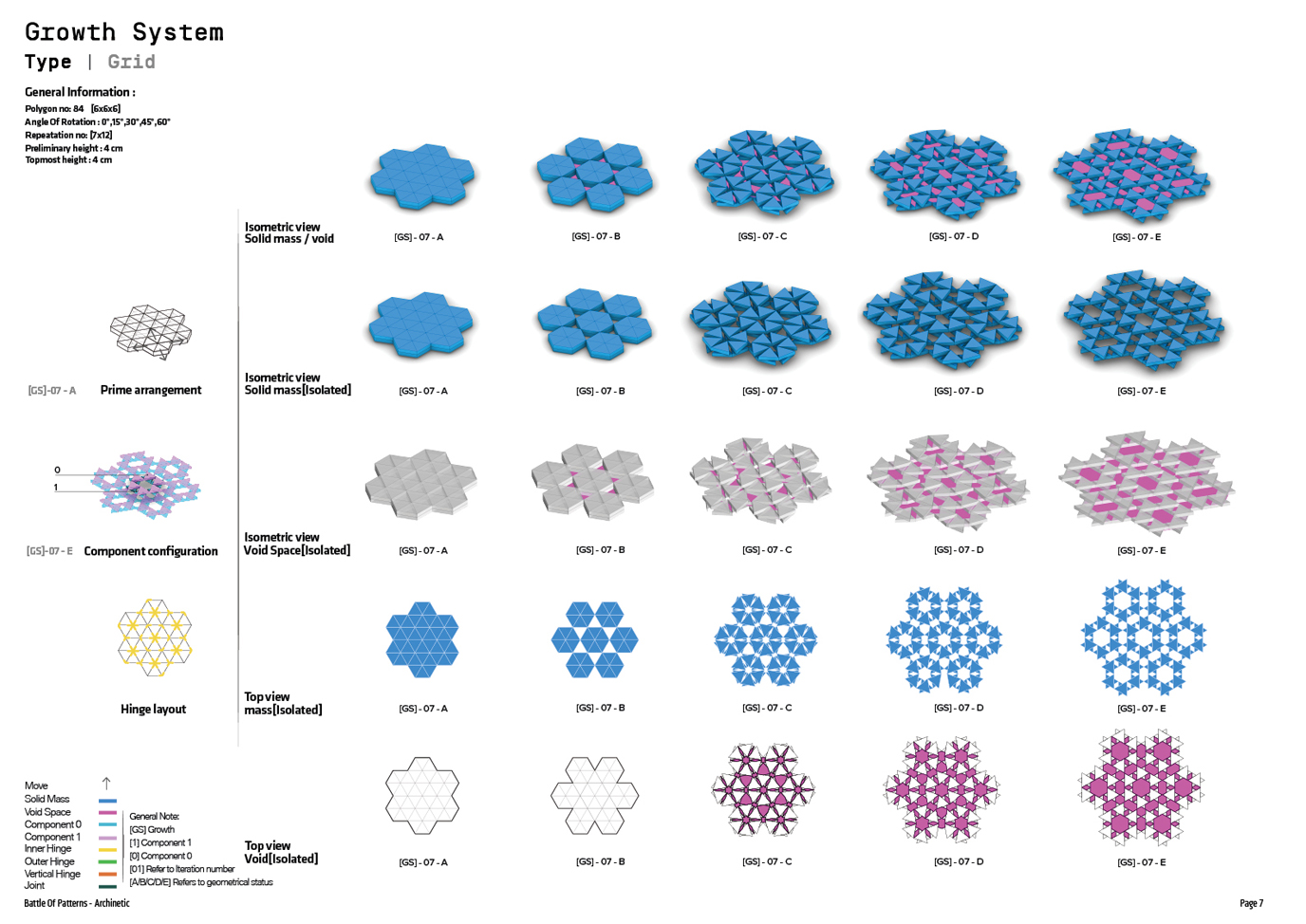
This phase focuses on analyzing how individual components relate within controlled aggregation systems. By identifying these relationships, participants develop a problem-solving “pattern cluster language” that enables exploration of organizational structures, spatial behaviors, and subsystem formations.
Phase 3 — Program Definition
Each group formulates a design strategy based on a self-defined program brief aligned with a chosen scenario. This stage includes crafting a narrative, identifying conceptual inspiration, and articulating the intentions that guide the final project.
Phase 4 — Design Adaptation
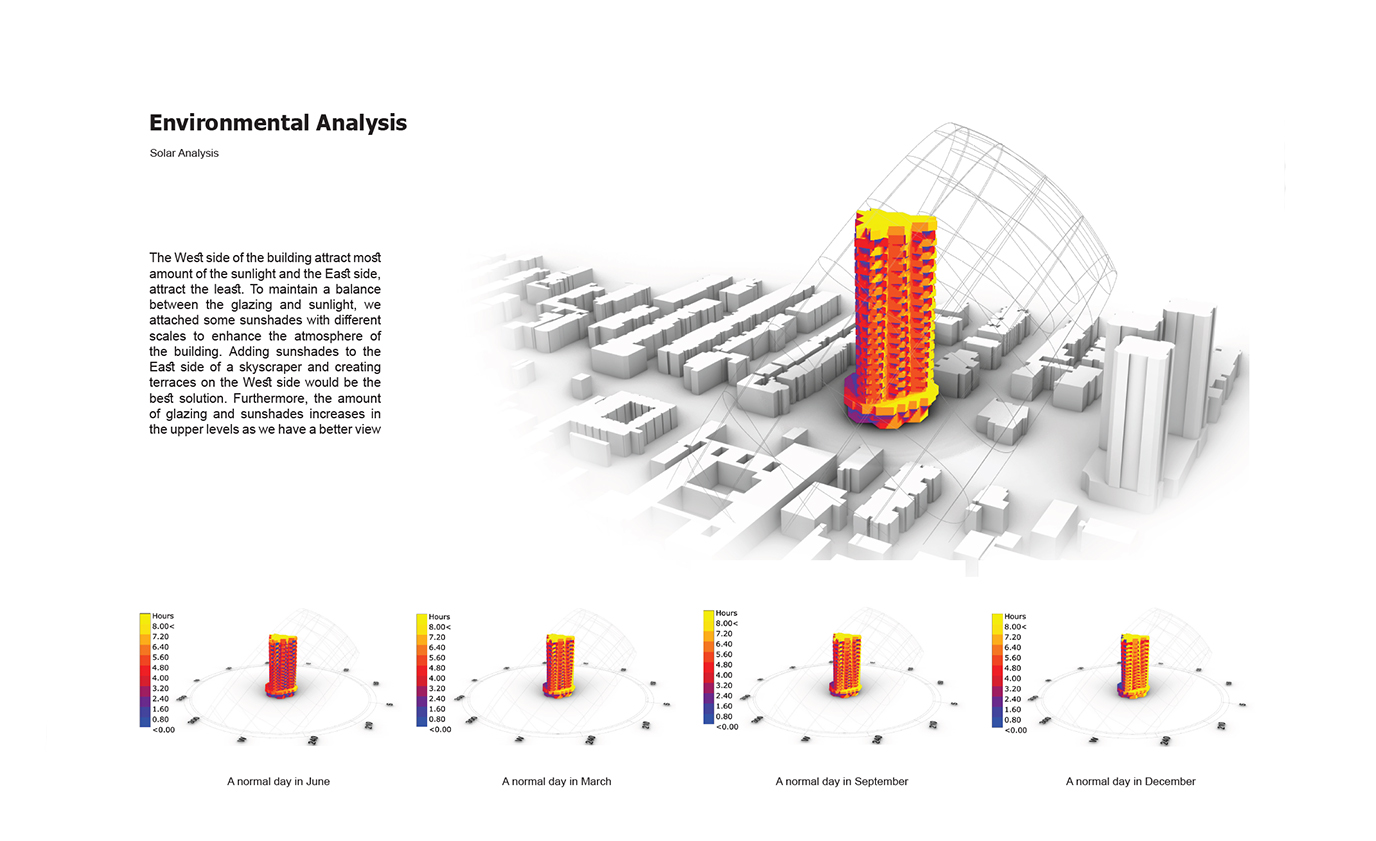
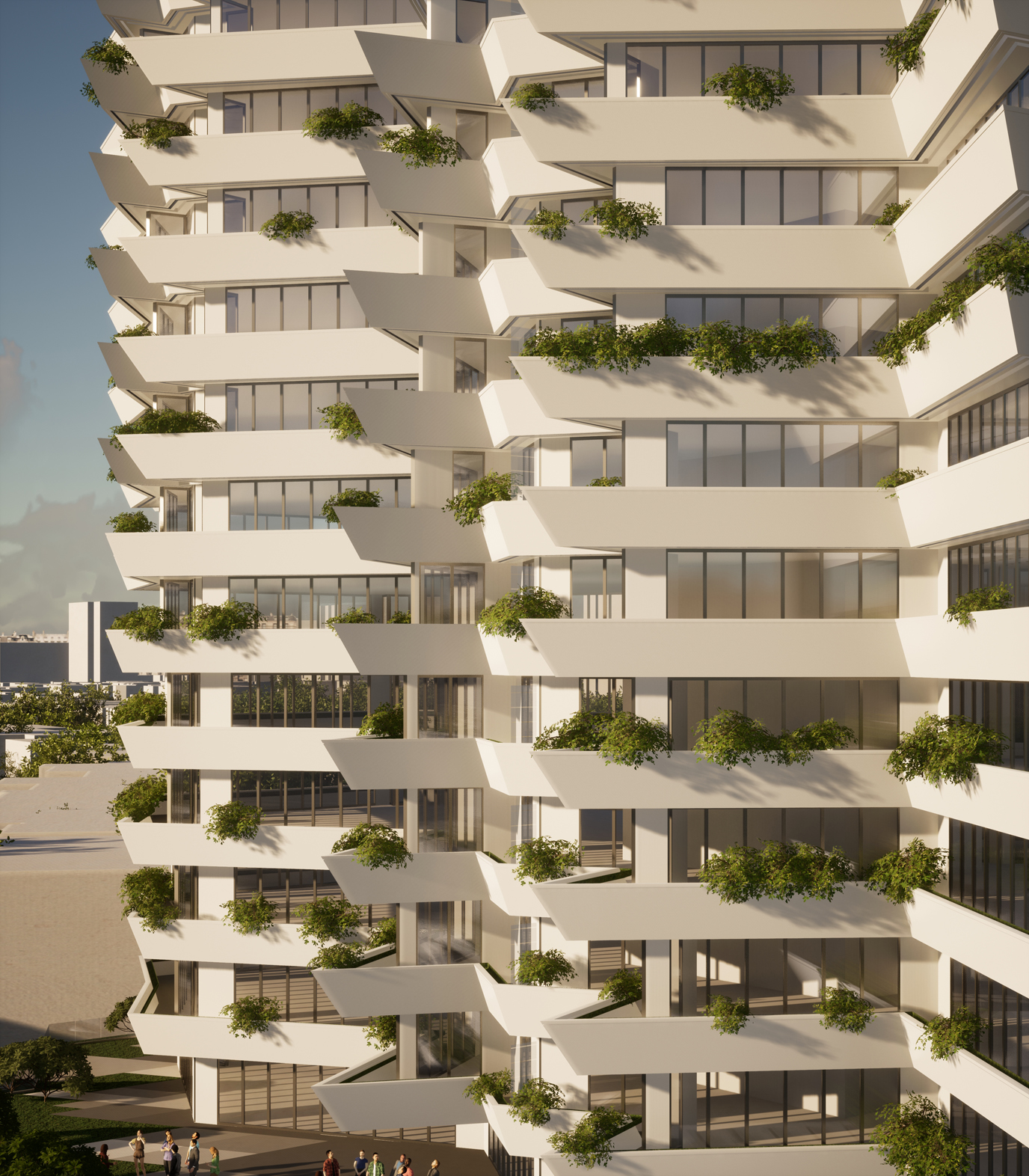
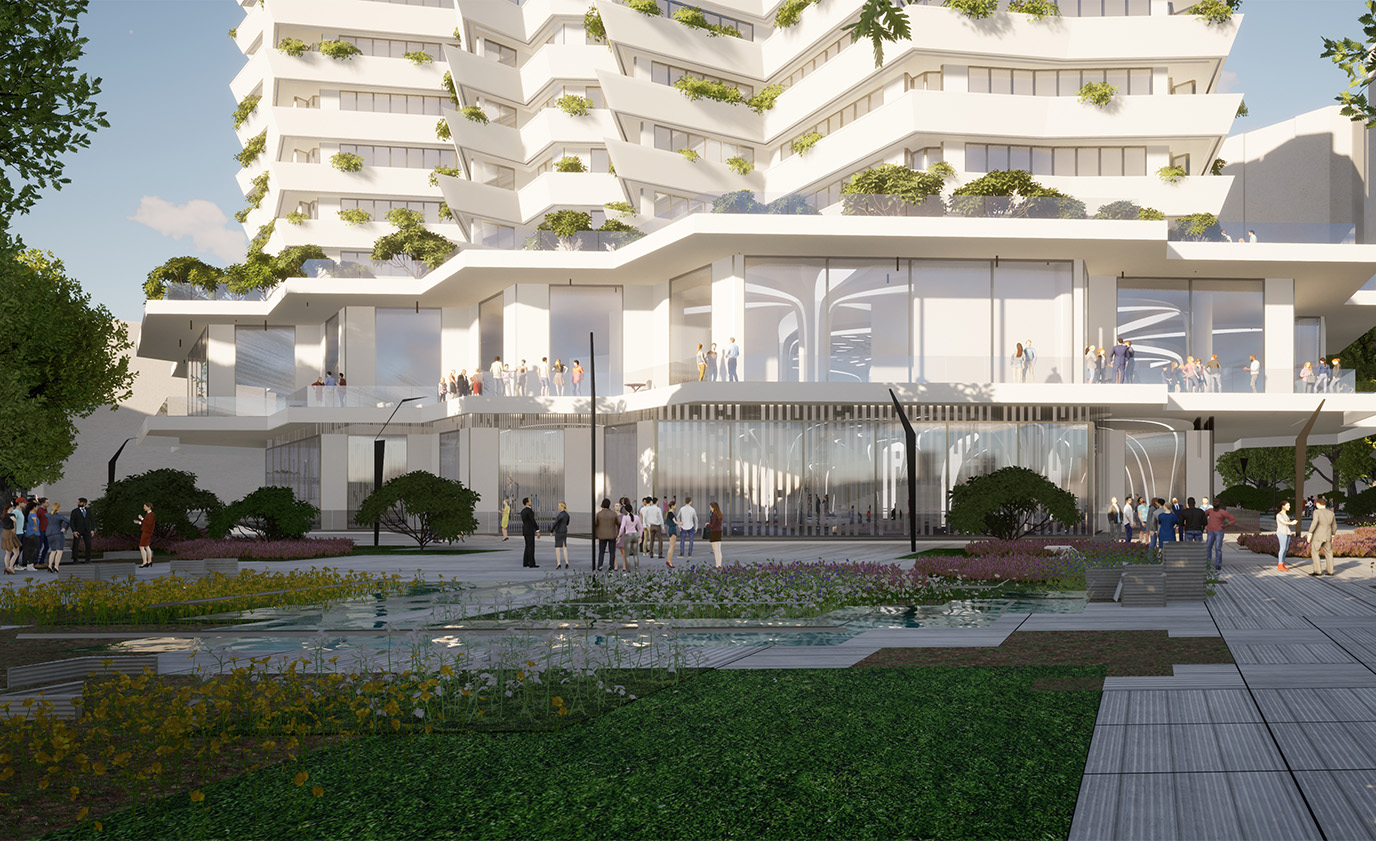
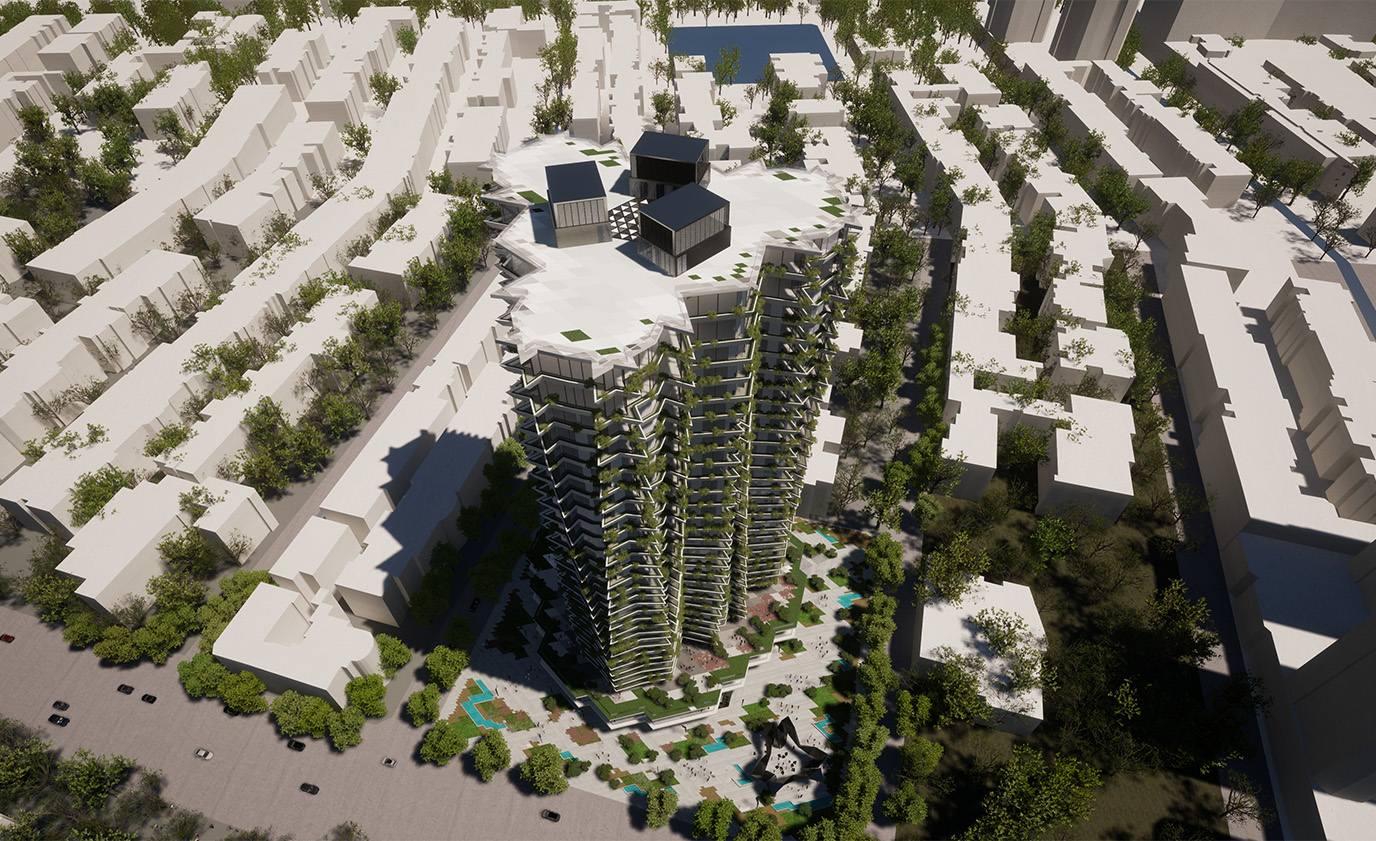
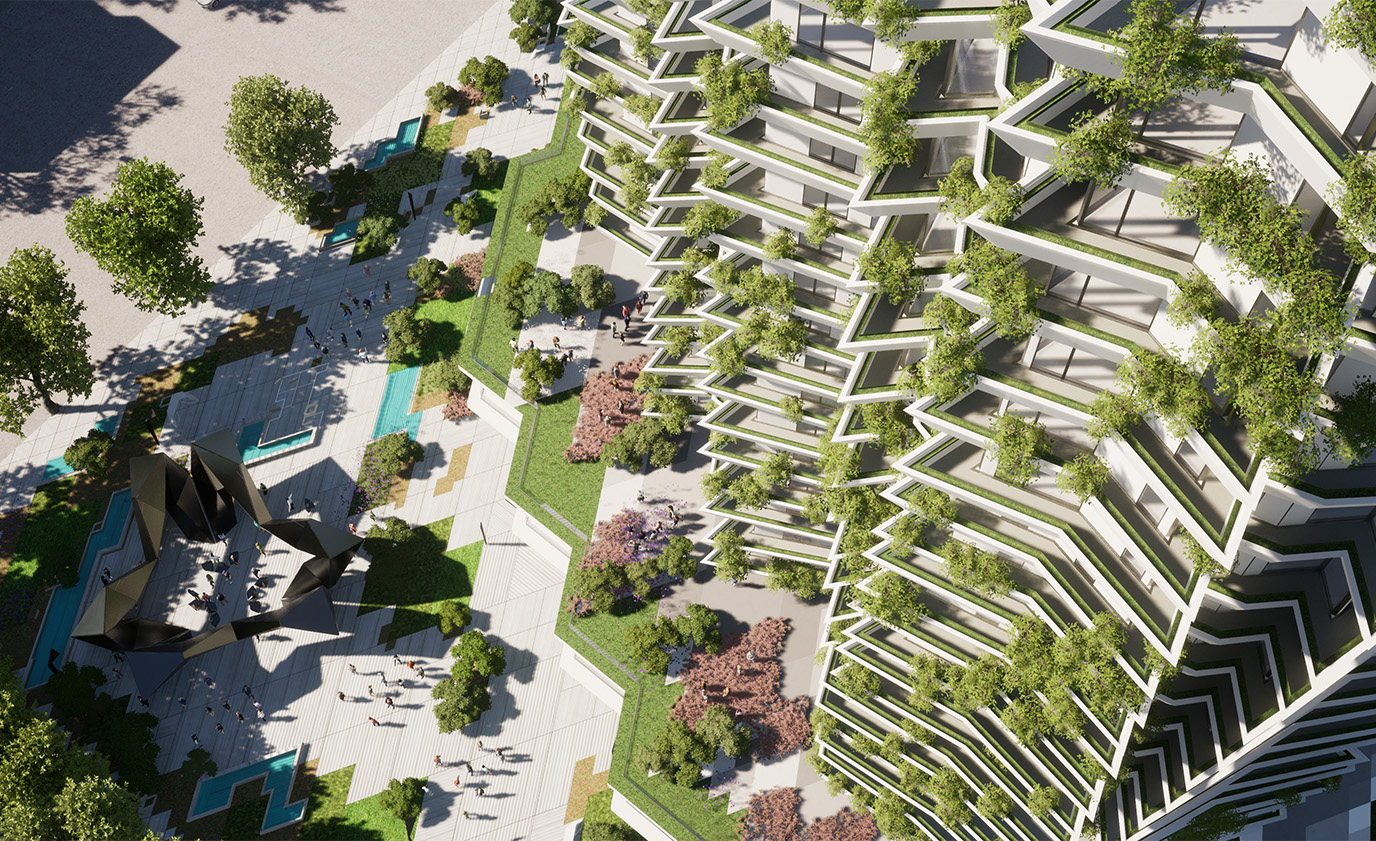
In the final phase, insights from earlier studies are synthesized into a cohesive formal strategy. Participants adapt their selected components into a modular system tailored to the site and brief conditions, transforming exploratory research into a resolved design proposal.